
Last Updated: April 30, 2026, 10:45 AM IST
Students across India preparing for competitive exams conducted by bodies like the Union Public Service Commission, Staff Selection Commission, and the Institute of Banking Personnel Selection are increasingly choosing home-based preparation. With rising coaching costs and flexible digital resources, aspirants are shifting toward structured self-study strategies.
Source: Official Websites of UPSC, SSC, IBPS
Preparing for government exams at home requires discipline, a clear understanding of the syllabus, and consistent practice. With the right strategy, resources, and routine, students can effectively compete without coaching. This guide explains a practical plan, common mistakes, and actionable tips tailored for Indian aspirants.
How to prepare for government exams at home?
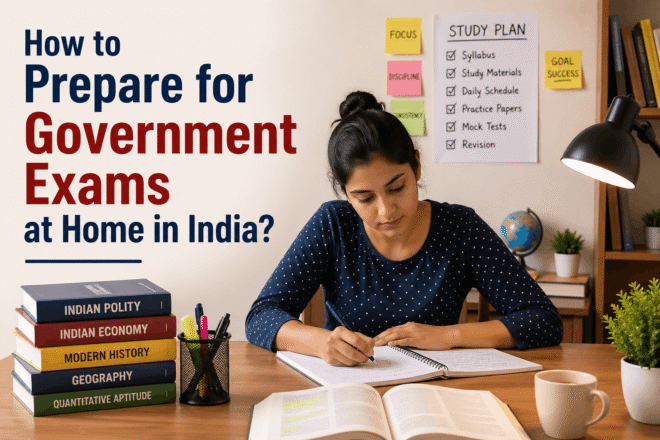
Start by understanding the exam syllabus and pattern, create a realistic daily study plan, use reliable study materials, practice mock tests regularly, and revise consistently. Maintaining discipline and avoiding distractions are key to success without coaching.
Overview
Preparing at home sounds simple, but it often fails because students underestimate structure. Unlike coaching institutes, there is no fixed timetable or peer pressure. That freedom can either become your strength or your biggest weakness.
Government exams in India, such as UPSC, SSC, banking, and railways, follow predictable patterns. The challenge is not just knowledge but consistency over months.
At home, your biggest competition is not other students; it is your own distractions.
Latest Update
In recent years, exam authorities have not significantly changed core syllabus patterns, but the competition level has increased due to:
- Increased online accessibility of study materials
- More applicants are appearing for exams like the SSC and banking exams
- Greater emphasis on current affairs and analytical skills
This means self-study is possible, but only with smarter preparation, not just longer hours.
Important Dates (Example Cycle for Most Exams)
| Activity | Timeline |
|---|---|
| Notification Release | Jan – April |
| Application Window | 3–4 weeks |
| Prelims Exam | May – July |
| Mains Exam | Sept – Nov |
| Interview / Final Stage | Dec – March |
(Dates vary depending on exam and authority)
Official Link Section
- UPSC Official Website: https://www.upsc.gov.in
- SSC Official Website: https://ssc.nic.in
- IBPS Official Website: https://www.ibps.in
Always rely on these official portals for notifications and updates.
How to Download Study Material
Many students waste weeks searching for “perfect notes.” Instead:
- Visit official exam websites and download syllabus PDFs
- Use trusted platforms like NCERT for basics
- Avoid random Telegram dumps without verifying quality
- Focus on fewer, high-quality sources instead of collecting too many
The goal is not collecting material but mastering it.
Details on Admit Card
Admit cards are usually released 10–15 days before exams on official websites. Students should:
- Check details like name, exam center, and timing
- Carry a valid ID proof along with the admit card
- Avoid last-day downloads to prevent server issues
Missing small details here has cost many students their attempt.
What Students Should Do Now
If you are starting preparation from home today, focus on these steps:
1. Fix a Realistic Study Routine
Avoid copying toppers’ 12-hour schedules. Start with 5–6 focused hours.
2. Break the Syllabus
Divide subjects into manageable parts. For example:
- Quant: Daily practice
- Reasoning: Alternate days
- Current Affairs: Daily short revision
3. Weekly Self-Testing
Without testing, preparation is incomplete. Attempt one mock test every week.
4. Track Progress
Keep a notebook or digital tracker. Seeing progress improves consistency.
Important Tips / Warnings
- Do not wait for the “perfect time” to start
- Avoid comparing your journey with others
- Consistency beats motivation
- Revision matters more than new topics
- Focus on accuracy, not just speed
A common mistake is ignoring revision. Many students know concepts but fail to recall them under pressure.
Eligibility (General Overview for Major Exams in India)
While eligibility varies, most government exams require:
- Minimum qualification: Graduation (for UPSC, SSC, IBPS)
- Age limit: Usually 18–32 years (varies by category)
- Nationality: Indian citizen
Always verify specific eligibility on official websites.
Exam Preparation Tips
- Practice previous year question papers seriously
- Focus on time management during mock tests
- Read newspapers like The Hindu or The Indian Express for current affairs
- Improve weak areas instead of avoiding them
- Maintain a revision cycle every 7–10 days
FAQs:
1. Can I crack government exams without coaching?
Yes, many candidates succeed through disciplined self-study and mock test practice.
2. How many hours should I study daily at home?
5–8 focused hours are enough if consistent.
3. Which exam is easiest to prepare for at home?
SSC and banking exams are relatively easier to manage with self-study compared to UPSC.
4. How important are mock tests?
Extremely important. They simulate real exam pressure.
5. What is the biggest mistake students make?
Lack of consistency and over-collecting of study material.
6. Is online study enough?
Yes, if you use reliable sources and maintain discipline.
7. How to stay motivated while studying at home?
Set small goals and track progress regularly.
8. Should I follow toppers’ strategies?
Use them as guidance, but adapt to your own pace.
9. How to manage distractions at home?
Create a fixed study environment and schedule.
10. Is revision more important than new topics?
Yes, revision improves retention and exam performance.
Disclaimer
This content is for informational purposes only. Users are advised to visit the official website for accurate and up-to-date information.

Education Content Writer | Exam Updates Specialist
Kiran has 3+ years of experience covering university results, sarkari naukri updates, and student guides. He ensures all information is verified from official sources.